
The 7-day Shira Route is a scenic, challenging, and less-crowded western approach to Kilimanjaro, often requiring a drive to higher altitudes (approx.) on day one, allowing for a quick, scenic trek across the Shira Plateau. It merges with the Lemosho/Machame routes, featuring high-altitude acclimatization, steep, demanding climbs, and high success rates.
After landing at Kilimanjaro International Airport (JRO), you will be met by your transfer driver and taken to your hotel.
Dinner
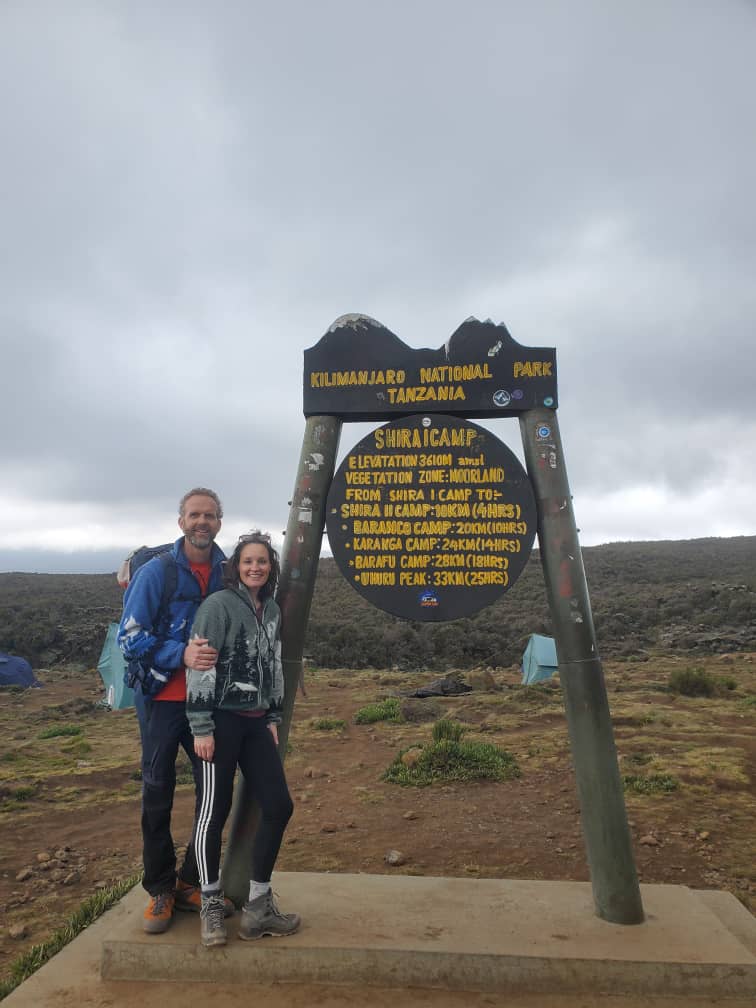
Terrain: Moorland / Heath The journey begins with a long, scenic drive to the Morrum Barrier Gate. Unlike other routes, you start high. The hike is a gentle, short trek across the moorland to Shira 1 Camp, allowing your body to begin adjusting to the thin air.
1–2 hours
3,600m to 3,500m
Heather
Dinner
Shira 1 Camp
Terrain: Moorland A steady trek across the vast Shira Plateau. This is a photographic highlight, offering unobstructed views of Kibo Peak. You will bypass the Shira Cathedral (a volcanic buttress) before settling at Shira 2 Camp, where you join trekkers coming from the Lemosho Route.
5 – 6 hours
3,500m to 3,850m
Moorland
Dinner
Terrain: Semi-desert / Alpine Desert Acclimatization Day: This is a critical “walk high, sleep low” day. You will climb to the massive Lava Tower (4,600m) for lunch. This triggers your body to produce more red blood cells before you descend into the beautiful Barranco Valley, famous for its prehistoric Giant Senecios.
7 hours
3,850m to 4,600m (Lava Tower) to 3,950m
Alpine Desert
Dinner, Breakfast
4 – 5 hours
3,950m to 4,200m
Alpine Desert
Dinner, Breakfast
Terrain: Alpine Desert A shorter trekking day designed to get you to Barafu Camp by lunch. This gives you the entire afternoon to rest, hydrate, and prepare your gear for the midnight summit push. The landscape is now bleak and rocky, with the summit glaciers visible above.
3–4 hours
4,200m to 4,673m
Alpine Desert
Dinner, Breakfast
Terrain: Arctic Scree and Ice The Ultimate Challenge: You will be woken up at midnight. The climb to Stella Point (5,685m) is a mental and physical test of endurance. From there, it is a shorter, gradual hike to Uhuru Peak, the highest point in Africa. After celebrating, you will descend back to Barafu for a quick rest before continuing down to Mweka Camp.
12–15 hours
4,673m to 5,895m (Summit) to 3,100m
Ice-Capped Summit
Dinner, Breakfast
Terrain: Rainforest The final leg takes you through the lush rainforest. At the Mweka Gate, you will sign out and receive your official gold certificate (for Uhuru) or green certificate (for Stella Point). A vehicle will meet you for the drive back to your hotel for a long-awaited hot shower.
3 – 4 hours
3,100m to 1,640m
Rain Forest
Transfer anytime to Kilimanjaro Airport.
Price per person based on group size. All prices in USD
Price per person
PAX
1 PAX
2 PAX
3 PAX
4 PAX
5 PAX
6 PAX
Price
Price per person
PAX
1 PAX
2 PAX
3 PAX
4 PAX
5 PAX
6 PAX
Shira 1 Camp is a scenic campsite located on the expansive Shira Plateau on Mount Kilimanjaro. Situated at approximately 3,500 meters (11,483 feet) above sea level, the camp is commonly used by trekkers following the Lemosho and Shira routes. It marks the transition from the rainforest and moorland zones into the open alpine environment of the mountain.
The camp sits on one of Kilimanjaro’s oldest volcanic formations, offering wide-open landscapes and spectacular panoramic views. Unlike the forested camps lower on the mountain, Shira 1 Camp features open grasslands, volcanic rock formations, and sparse vegetation adapted to the harsher mountain climate. The area provides clear views of Kibo Peak and the surrounding plains stretching toward western Tanzania.
Trekkers reaching Shira 1 Camp often notice the effects of higher altitude for the first time, making the camp an important acclimatization stop during the climb. The route leading to the camp is less steep than many other sections of the mountain, allowing climbers to gradually gain elevation while enjoying the unique scenery of the Shira Plateau.
Accommodation at Shira 1 Camp is entirely tent-based, with camping areas spread across the plateau. Facilities are basic and include toilets and ranger stations. Nights at the camp are usually colder and windier than those at lower camps due to the open landscape and higher elevation. However, the clear skies often provide excellent opportunities for stargazing and photography.
There are no results matching your search
Everything you need to know about what makes this route special
Approaches from the west, crossing the plateau.
Offers diverse views, including the Shira Plateau, Lava Tower, and Southern Ice Field.
The high starting point means rapid acclimatization is required on day one, making it slightly more demanding than the Lemosho route.
Entirely a camping route.
Choose the best season for your Mount Kilimanjaro Climbing adventure
Clear & Warm
21–27°C base / -7 to -29°C summit
High
Premium
The warmest months on the mountain, with excellent visibility. Expect generally clear skies in the mornings and evenings; clouds may appear during the day with occasional brief showers.
Clear & Cold
15–20°C base / -10 to -20°C summit
Very High
Premium
The probability of rain is minimal, skies are mostly clear, and the visibility is unparalleled. July and August are the busiest months on the mountain, with crowds thinning in September and even more so in October.
Variable — occasional showers
18–25°C base / -10 to -20°C summit
Low to Moderate
Standard
Early October is still stable, but by November, less stable weather patterns can bring rain every day for a short period. March begins with a short dry window, but by mid-March the long rains begin.
The "First Night" Strategy
If you choose this route, it is highly recommended to spend a night or two in Arusha or Moshi (roughly 1,400m–1,800m) before starting your climb to help your body begin the adjustment process before you hit the 3,600m mark.
The Shira Route is rated as moderate to difficult.
For the 7-day Shira Route, the success rate is approximately 75% to 80%.
While the route provides good acclimatization from Day 3 onwards, the lower success rate compared to the 8-day Lemosho (which is ~90%+) is primarily due to climbers struggling with the altitude on the very first night.
This route is ideal for:
Real experiences from real adventures who’ve explored Tanzania with us


 Verified
 Verified
 Verified
 Verified
 Verified
 Verified
 Verified
 Verified
 Verified
 Verified
Let our travel specialists create a personalized itinerary just for you
There are no results matching your search