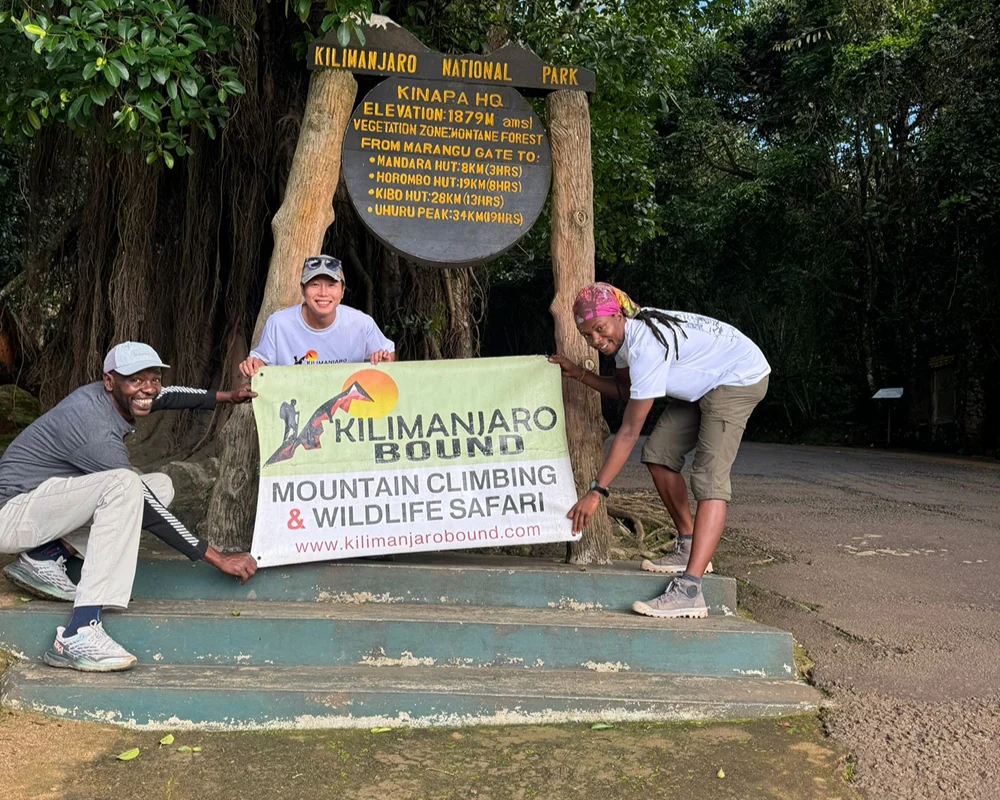
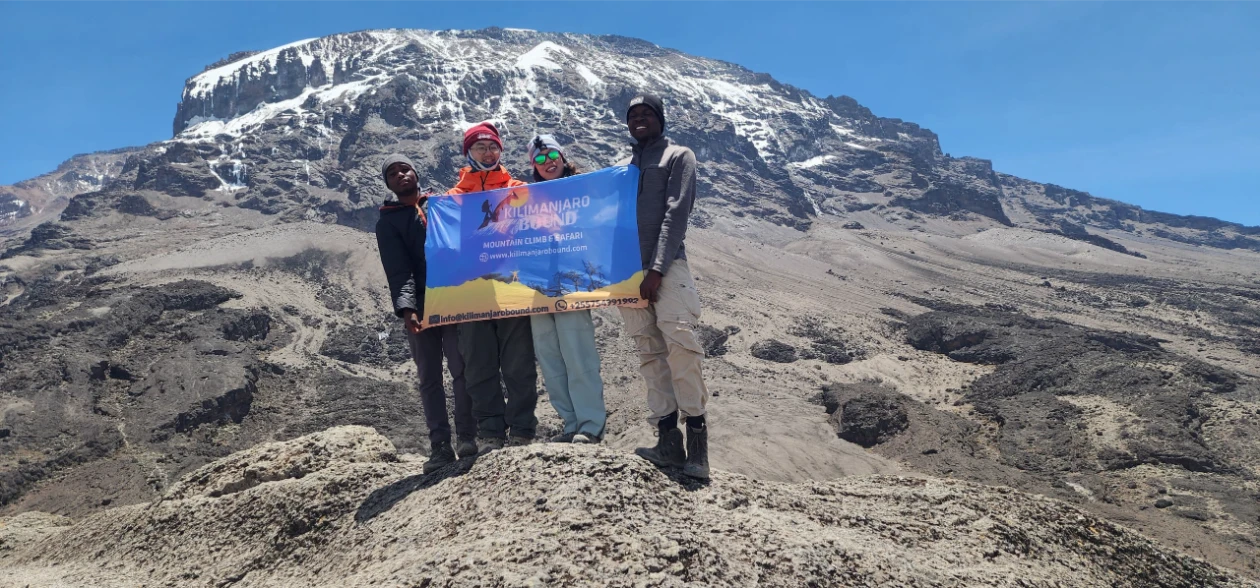
The 6-day Marangu route is a popular, classic trek up Mount Kilimanjaro, offering hut accommodations and an extra acclimatization day at Horombo Hut to increase your chances of reaching the summit. It is often called the “Coca-Cola” route and is a good option for first-time trekkers.
Duration: 6 Days / 5 Nights on the mountain. (While a 5-day version exists, the 6-day itinerary includes a vital acclimatization day at Horombo Hut).
Distance: Approximately 72 km (45 miles) round trip. This is a “classic” trek where you ascend and descend along the same path.
Difficulty: Moderate. The terrain is relatively stable and the incline is more gradual than other routes. However, the shorter timeframe makes altitude sickness a significant risk.
Scenery: Beautiful but Consistent. You pass through rainforest, moorland, and alpine desert. While scenic, you see the same views on the way down as you did on the way up, unlike the traverse routes.
Traffic: High. Due to its reputation as the “easiest” route and its unique hut system, it is often the most crowded trail on the mountain.
Summit Success Rate: Approximately 60-70% for the 6-day itinerary. Despite the “gentle” slope, the success rate is lower than Lemosho because the climb is less gradual for acclimatization.
Accommodation: Hut-Based. This is the only route where you sleep in shared A-frame bunkhouses with solar power and dining halls, making it ideal for trekking during the rainy season.


Upon arrival at Kilimanjaro International Airport (JRO), you’ll be transferred to your hotel. You’ll meet your guide for a thorough pre-climb briefing, equipment check, and discuss the trek ahead. This is an important opportunity to ask any last-minute questions and ensure you have all essential gear.
Your adventure begins! After breakfast, you’ll be driven from your hotel to Marangu Gate, the official entry point to Kilimanjaro National Park. Here, registration formalities will be completed, and your porters will organize and weigh their loads.
The trek starts through lush, dense rainforest. Keep an eye out for vibrant birdlife, blue monkeys, and the black-and-white Colobus monkeys. The trail is well-defined and generally uphill but at a comfortable gradient. You’ll enjoy a picnic lunch on the way.
Upon reaching Mandara Hut, a cluster of A-frame wooden huts, you’ll settle in. In the afternoon, your guide may lead an optional short walk to Maundi Crater (about 15-20 minutes away) for panoramic views of Kenya and Northern Tanzania on clear days. Dinner will be served in the communal dining hall. Mandara Hut offers basic amenities, including flush toilets and running cold water.
3-4 hours
900m/2,960ft
Rain Forest
Breakfast, Lunch, Dinner
Mandara Hut
After an early breakfast, you’ll leave Mandara Hut and quickly emerge from the rainforest, entering the heath and moorland zone. The vegetation changes dramatically, with smaller, tougher plants like giant heather and various grasses. As you ascend, you’ll begin to get your first clear views of Kibo and Mawenzi Peaks, weather permitting.
The trail gradually becomes more open, offering expansive views. You’ll stop for lunch en route. The hike to Horombo Hut is steady and rewarding, with the landscape becoming increasingly rugged. Horombo Hut is a larger camp, bustling with climbers, and provides excellent views of the plains below. The facilities here are similar to Mandara, with basic washrooms and “long drop” toilets.
5-6 hours
Moorland
Breakfast, Lunch, Dinner
Horombo Hut

This is a crucial day for acclimatization and is the key difference of the 6-day itinerary. Instead of pushing higher, you’ll spend a full day at Horombo, allowing your body more time to adjust to the altitude.
Your guide will lead an optional acclimatization hike to Zebra Rocks (approx. 3,980m / 13,060ft). This distinctive rock formation, named for its black and white stripes caused by mineral deposits, offers a gentle climb with stunning views of the surrounding landscape and Kibo Peak. The principle here is “climb high, sleep low,” which significantly aids in acclimatization and boosts your summit success rate.
You’ll return to Horombo Hut for a warm lunch and have the afternoon to rest, hydrate, and mentally prepare for the days ahead. This extra day is invaluable for minimizing the effects of altitude sickness.
3-4 hours
300m / 980ft
Alpine Desert
Lunch, Dinner
Horombo Hut
Today’s trek takes you into the alpine desert, a harsh and barren landscape with sparse vegetation. The trail becomes rockier and more exposed, offering continuous views of Kibo’s summit. You’ll cross the “Saddle,” a vast, boulder-strewn plateau that connects Kibo and Mawenzi peaks.
There is a final water point before Kibo Hut (around 4,130m / 13,550ft), so ensure your water bottles are full. Kibo Hut is a stone-built dormitory-style hut, designed for maximum occupancy before the summit attempt. Conditions are basic, and there are no running water facilities or flush toilets at this altitude (long drop toilets are available).
Upon arrival, you’ll have an early dinner and a crucial briefing for the summit night. The evening will be spent trying to rest as much as possible, as the summit push begins very early in the morning.
5-6 hours
980m / 3,220ft
Alpine Desert
Lunch, Dinner
Kibo Hut
This is the most challenging and rewarding day of your climb. You’ll be woken up around midnight for a light breakfast and hot drinks. The ascent begins in the dark, using headlamps to light the way. The initial path is a steep scree slope, demanding mental fortitude and physical endurance.
You’ll trek slowly, “pole pole” (slowly, slowly in Swahili), aiming to reach Gilman’s Point (5,685m / 18,650ft) on the crater rim by sunrise. This is a significant milestone, offering breathtaking views as the sun illuminates the glaciers and the vast plains below.
From Gilman’s Point, you’ll continue along the crater rim, passing Stella Point (5,756m / 18,885ft) on a more gradual, but still challenging, path to Uhuru Peak (5,895m / 19,340ft), the highest point in Africa!
At Uhuru Peak, you’ll spend a short time taking photos and soaking in the incredible achievement. The descent back to Kibo Hut is relatively quick on the scree, but can be tough on the knees. You’ll have a short rest and some breakfast at Kibo Hut before continuing your descent all the way to Horombo Hut, which will feel significantly more oxygen-rich and comfortable. This is a very long day, and you’ll arrive at Horombo exhausted but elated.
7 - 8 hours
1,195m / 3,920ft (to summit)
Alpine Desert
Lunch, Dinner
Horombo Hut
After a well-deserved night’s sleep, your final day on the mountain is a long descent back to Marangu Gate. You’ll retrace your steps through the moorland and back into the lush rainforest. This day is primarily downhill and can be tough on the knees, so trekking poles are highly recommended.
Upon reaching Marangu Gate, you’ll sign out of Kilimanjaro National Park and receive your well-earned summit certificates (green for Gilman’s Point, gold for Uhuru Peak). Your vehicle will be waiting to transfer you back to your hotel in Moshi for a celebratory dinner, hot showers, and a much-anticipated rest.
5-7 hours
1,860m / 6,100ft
Moorland
Breakfast, Lunch
After breakfast, you will be transferred to Kilimanjaro International Airport (JRO) for your flight home, carrying with you memories of an incredible adventure or Join our Tanzania wildlife Safari.
Price per person based on group size. All prices in USD
Price per person
PAX
1 PAX
2 PAX
3 PAX
4 PAX
5 PAX
6 PAX
Price
Price per person
PAX
1 PAX
2 PAX
3 PAX
4 PAX
5 PAX
6 PAX
Mandara Hut is the first overnight stop on the Marangu Route of Mount Kilimanjaro, located at approximately 2,700 meters (8,858 feet) above sea level. The hut is situated within the lush rainforest zone on the southeastern slopes of the mountain.
The trek to Mandara Hut passes through dense montane forest filled with giant trees, ferns, moss-covered vegetation, and diverse birdlife. Climbers may also encounter blue monkeys and colobus monkeys along the trail, making the journey especially scenic and enjoyable.
Mandara Hut provides trekkers with a comfortable introduction to Kilimanjaro climbing before continuing toward higher camps such as Horombo Hut. The cooler mountain temperatures and forest atmosphere create a relaxing overnight environment after the first trekking day.
Accommodation at Mandara Hut consists of wooden A-frame mountain huts with shared dining and bathroom facilities. Nearby attractions include the Maundi Crater, which offers beautiful views of the surrounding landscape and, on clear days, distant views toward Kenya.
Horombo Hut is a popular mountain hut located on the Marangu Route of Mount Kilimanjaro at approximately 3,720 meters (12,205 feet) above sea level. It serves as both an overnight stop and an important acclimatization point for climbers ascending and descending the mountain.
The hut is positioned within the moorland zone, surrounded by rolling hills, giant groundsels, and volcanic landscapes. The area offers beautiful views of both Kibo Peak and Mawenzi Peak, creating one of the most scenic overnight locations on the Marangu Route.
Many climbers spend an extra night at Horombo Hut for acclimatization before continuing toward Kibo Hut. The gradual adjustment to altitude helps improve summit success rates while allowing trekkers time to rest and explore the surrounding landscape.
Accommodation at Horombo Hut includes dormitory-style sleeping huts with shared dining and bathroom facilities. The camp is larger and more social than many other Kilimanjaro camps due to the number of trekkers using the Marangu Route.
Horombo Hut is a popular mountain hut located on the Marangu Route of Mount Kilimanjaro at approximately 3,720 meters (12,205 feet) above sea level. It serves as both an overnight stop and an important acclimatization point for climbers ascending and descending the mountain.
The hut is positioned within the moorland zone, surrounded by rolling hills, giant groundsels, and volcanic landscapes. The area offers beautiful views of both Kibo Peak and Mawenzi Peak, creating one of the most scenic overnight locations on the Marangu Route.
Many climbers spend an extra night at Horombo Hut for acclimatization before continuing toward Kibo Hut. The gradual adjustment to altitude helps improve summit success rates while allowing trekkers time to rest and explore the surrounding landscape.
Accommodation at Horombo Hut includes dormitory-style sleeping huts with shared dining and bathroom facilities. The camp is larger and more social than many other Kilimanjaro camps due to the number of trekkers using the Marangu Route.
Kibo Hut is a high-altitude mountain hut located on Mount Kilimanjaro at approximately 4,720 meters (15,485 feet) above sea level. It serves as the main summit camp for climbers using the Marangu Route and Rongai Route before their final ascent to Uhuru Peak.
The hut is situated in the alpine desert zone between the peaks of Kibo and Mawenzi. The surrounding landscape is harsh and rocky, with volcanic terrain, cold temperatures, and thin air creating a true high-mountain environment. Vegetation is almost nonexistent at this altitude, and conditions are often windy and extremely cold, especially during the night.
Climbers usually arrive at Kibo Hut in the afternoon, rest for a few hours, and begin their summit attempt around midnight. The camp plays a critical role in allowing trekkers to prepare physically and mentally for the demanding climb to Gilman’s Point and Uhuru Peak.
Accommodation at Kibo Hut consists of dormitory-style mountain huts with bunk beds and shared facilities. Despite the simple setup, the hut provides important shelter for climbers before the summit ascent.
Horombo Hut is a popular mountain hut located on the Marangu Route of Mount Kilimanjaro at approximately 3,720 meters (12,205 feet) above sea level. It serves as both an overnight stop and an important acclimatization point for climbers ascending and descending the mountain.
The hut is positioned within the moorland zone, surrounded by rolling hills, giant groundsels, and volcanic landscapes. The area offers beautiful views of both Kibo Peak and Mawenzi Peak, creating one of the most scenic overnight locations on the Marangu Route.
Many climbers spend an extra night at Horombo Hut for acclimatization before continuing toward Kibo Hut. The gradual adjustment to altitude helps improve summit success rates while allowing trekkers time to rest and explore the surrounding landscape.
Accommodation at Horombo Hut includes dormitory-style sleeping huts with shared dining and bathroom facilities. The camp is larger and more social than many other Kilimanjaro camps due to the number of trekkers using the Marangu Route.
There are no results matching your search
Everything you need to know about what makes this route special
The only route on Kilimanjaro to offer mountain huts at every campsite with beds, mattresses, and solar-generated lighting, rather than tents.
While the terrain is less demanding, the short acclimatization profile can still be challenging. The 6-day version has a better success rate (around 60-86% with reputable operators) compared to the 5-day itinerary, thanks to the extra day at Horombo Hut
The route features diverse ecosystems, from rainforest to alpine desert, though it follows the same path for both ascent and descent, offering less scenic variety than routes like Lemosho or Machame.
Climbers who prefer solid shelter, are on a tighter budget, or have limited time.
Choose the best season for your Mount Kilimanjaro Climbing adventure
Clear & Warm
21–27°C base / -7 to -29°C summit
High
Premium
The warmest months on the mountain, with excellent visibility. Expect generally clear skies in the mornings and evenings; clouds may appear during the day with occasional brief showers.
Clear & Cold
15–20°C base / -10 to -20°C summit
Very High
Premium
The probability of rain is minimal, skies are mostly clear, and the visibility is unparalleled. July and August are the busiest months on the mountain, with crowds thinning in September and even more so in October.
Variable — occasional showers
18–25°C base / -10 to -20°C summit
Low to Moderate
Standard
Early October is still stable, but by November, less stable weather patterns can bring rain every day for a short period. March begins with a short dry window, but by mid-March the long rains begin.
On Day 3 (your extra day), don't just sit in the hut. Do the short hike to Zebra Rocks. The "climb high, sleep low" principle is the most effective way to prevent altitude sickness.
When climbing the Marangu Route, you have two primary accommodation options: the classic Standard Huts and the newly upgraded VIP (Luxury) Huts. While both provide a roof over your head, the experience, privacy, and amenities differ significantly.
Many trekkers don’t realize there is a choice between the Standard Huts and the newly available VIP (Luxury) Huts.
The standard huts are the traditional choice for Marangu trekkers. Think of these as mountain dormitories—functional, social, and rugged.
The VIP or “Luxury” huts are designed for trekkers who want the hut experience without the “hostel” atmosphere. These are limited in number and often require early booking.
The Marangu route is often called the “easiest” route because it has a gradual incline and well-maintained paths. However, this is deceptive.
5-Day Route: Roughly 50% or lower. Many hikers get altitude sickness before reaching the final hut.
6-Day Route: Roughly 70–85%. The extra day at Horombo Hut allows your body to produce more red blood cells, which is usually the difference between finishing and turning back.
Marangu is the only route with permanent dormitory huts, so you don’t need a tent.
It earned this nickname years ago because it was considered “touristy” and you could actually buy a bottle of Coke at the huts. While you can still find some snacks and sodas at lower huts, it is no longer the “soft” option people assume—it still requires peak physical fitness.
Since you aren’t sleeping on the ground, you don’t need a sleeping mat, but you do need:
Yes! Marangu is the best route for the rainy season (April–May and November) because the huts keep you and your gear dry, unlike the tents on other routes.
Tipping is a mandatory cultural expectation on Kilimanjaro. For a 6-day trek, expect to tip roughly $300–$350 USD total per climber, which is split among your lead guide, assistant guide, cook, and porters.
Real experiences from real adventures who’ve explored Tanzania with us
Posted on TripadvisorVerified To the Uhuru Peak and back I summited Uhuru Peak in February 2026 via the 7-day Lemosho route. Kilimanjaro Bound was recommended to me by friends who had summited Mt. Kilimanjaro in 2021. The company accommodated my request on just three weeks’ notice. On the pre-trek day, I met my guide for a briefing about the ascent itinerary and the rental gear I would need. The ascent crew consisted of eight people who supported my daily needs throughout the adventure. My guide, Aggrey, was punctual, tactful, and patient. He was responsive to my requests, encouraging when needed, and knowledgeable about the wildlife and culture of Tanzania and other African countries. Aggrey was just the perfect guide for me - both in personality and in the mental support he provided throughout this challenging experience. My chef, Eli, prepared delicious meals, including fresh salads, fruits, and crepes with fruit jam which were my favorite. Kelvin was the first person I saw every morning, bringing me wash water and hot tea, and the last one to wrap up the day the same way. I also appreciated the hard work of the rest of the team—Colin, Gift, Baraka, Samson, and Michael—who carried our gear from camp to camp, brought fresh water from mountain streams, and maintained the portable toilet. They even met me halfway on the most challenging sections of the route (Lava Tower and the descent from Uhuru Peak, in my case) and helped me make it back to camp when I was super exhausted. Tips / What I wish I had done differently: I wish I had brought beef jerky or other dried meat/fish snacks, as meals from day 3 or 4 onward did not include meat due to limited storage capabilities for fresh meat products on a long trek. I wish I had taken a daytime nap or gotten more sleep before summit night (“push night”), as lack of sleep combined with high altitude made me very drowsy during the final ascent and made it more challenging.Posted on TripadvisorVerified An Unforgettable Experience – We All Summited Climbing Kilimanjaro with Kilimanjaro Bound was truly life-changing. We did the 6-day Marangu route with a small group of four, and every one of us reached the summit—something I credit directly to the incredible support we received on the mountain. Our main guide, Aggrey, was exceptional. His calm leadership, constant encouragement, and attention to how each of us was feeling made all the difference, especially on summit night. When things got hard, he never let us doubt ourselves. Reaching the summit together was emotional, humbling, and unforgettable. Kilimanjaro Bound doesn’t just guide climbs—they take care of people. I can’t recommend them highly enough.Posted on TripadvisorVerified Best experience ever with Kilimanjaro Bound!! I just finished 6 days on the Marangu route to Mt Kili, could not have done it without this amazing crew! All 4 in our group reached the summit!. Our guides, cook, porters, everyone worked so hard to make this experience happen. Everything was organized, great communication, we learned so much about the country, history, culture, wildlife, terrain. I can not say enough praise about this group, I’ve never seen such hard work, positive attitudes, and big smiles. You can tell they love what they are doing and care about their clients. It is truly one of the hardest things I’ve done and once in a lifetime experience. Thank you all for making it happen!!Posted on TripadvisorVerified A great day hike to Mandara hut I travelled solo with Kilimanjaro Bound for a day hike to the Mandara Hut. It was truly amazing and great experience. Mr Aggrey, my guide, is very experienced and knowledgeable. He made the trip enjoyable. I plan in 2027 to hike to the top of Kilimanjaro with KB. Thanks Aggrey for the great trip. Bello A.Posted on TripadvisorVerified ????️⭐️Amazing trip with Aggrey I recently completed my Kilimanjaro Ascent with Kilimanjaro Bound, and it was truly the experience of a lifetime. This was a solo trip for me, and from beginning to end, everything was seamless, well-organized, and filled with moments I will never forget. A very special thanks to my guide, Aggrey. He was absolutely outstanding—professional, knowledgeable, and incredibly supportive throughout the climb. From setting the right pace to keeping the atmosphere positive and safe, he made the journey not just successful, but deeply enjoyable. I couldn’t have asked for a better guide to accompany me on this adventure. Climbing Kilimanjaro had always been a dream, and with Kilimanjaro Bound (and Aggrey by my side), it turned into a reality far beyond expectations. I felt cared for, encouraged, and inspired every step of the way. ✨ If you’re planning to climb Kilimanjaro, I wholeheartedly recommend Kilimanjaro Bound—their professionalism and personal touch make all the difference.Posted on TripadvisorVerified Kilimanjaro beklommen met Kilimanjaro Bound We zijn 8 dagen met het bedrijf Kilimanjaro Bound de berg op geweest. We hadden het aangeraden gekregen van kennissen die vorig jaar ook met hen de Kilimanjaro beklommen hebben en daar erg enthousiast over waren. We hadden een team van 11 mensen mee (ze stelden zich voor als het Dream team, maar daar was geen woord aan gelogen), bestaande uit gidsen, porters een kok etc. Omdat je 8 dagen met elkaar op de berg zit ben je afhankelijk van het team voor eten, wash-wash, toilet. We hadden vanaf dag 1 direct het gevoel dat we volledig op hen konden bouwen en in goede handen waren. Dankzij het team (en ook dankzij onszelf natuurlijk) hebben we de Uhuru-peak bereikt, het hoogste puntje van de Kilimanjaro. We hadden voor de zekerheid vitaminepillen meegenomen, maar hebben die niet nodig gehad met alle verse groente en fruit die mee de berg op zijn gegaan. Zelfs op dag 8 kregen we nog verse watermeloen en ananas bij het ontbijt. We zijn ook grotere internationale bedrijven tegengekomen op de berg. Nu geloof ik dat je daar ook een mooi tijd mee hebt, maar wij waren heel erg blij met dit Tanzaniaanse bedrijf. Je werd in alles ontzorgd (behalve klimmen, dat moet je echt zelf doen), kon je eigen tempo lopen we hadden een heel fijn team. Een extra bedankje voor onze gidsen Amani en (papa) Atanas. We gaan deze ervaring nooit vergeten.Posted on TripadvisorVerified Thank you! Last November, I climbed to the summit of Kilimanjaro by bicycle. It was an amazing experience and an incredible challenge. I would like to express my deepest gratitude to all of my crew members.Posted on TripadvisorVerified Highly recommend! Fantastic experience climbing Mt Meru with Kilimanjaro Bound We had a truly unforgettable climb up Mount Meru, thanks to our fantastic guides, Aggrey and Samson! From start to finish, the entire team was exceptional. Aggrey and Samson went above and beyond to make sure we were well-prepared, informed, and comfortable throughout the journey. Not only did they guide us with professionalism and care, but they also shared fascinating information about the mountain, its surroundings, and the route—making the experience even more enriching. Most importantly, they always prioritized our safety and comfort, which allowed us to fully enjoy every moment of the climb. The meals on the trek were also delicious, exactly just what we needed to stay energized. A heartfelt thank you to the whole team, especially Aggrey and Samson, for making this adventure so special. We appreciate everything you did for us!Posted on TripadvisorVerified Recommended! Two days ago I just finished climb to Kilimanjaro. It was successfull mainly because of the attitude of the whole team from Kilimanjaro bound. All the provided service were incredible. Food was amazing and overall experience is unforgettable. I would for sure recommend this company, if you are looking for some adventure around Kilimanjaro. I ended up going with Kilimanjaro vound to another trip, one day to Materuni coffee and waterfalls which was also incredible!Posted on TripadvisorVerified "Highly recommended!" Aggrey was exceptional—always calm, prepared, and motivating. Kilimanjaro Bound took care of every detail, making our trek safe and enjoyable. A truly top-tier agency!Load more
Let our travel specialists create a personalized itinerary just for you
There are no results matching your search