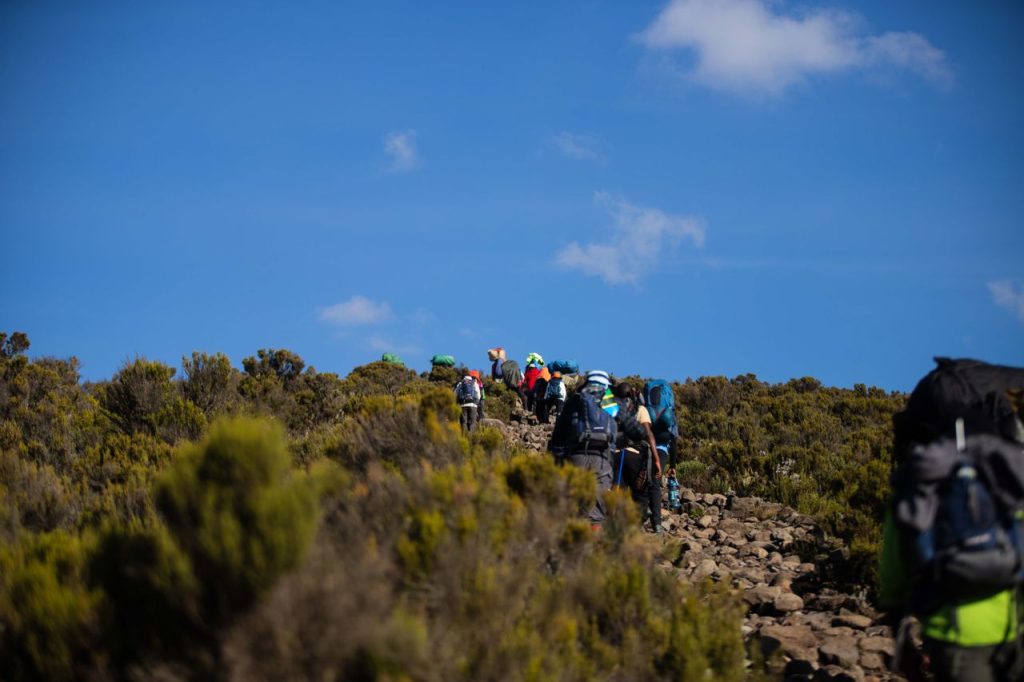
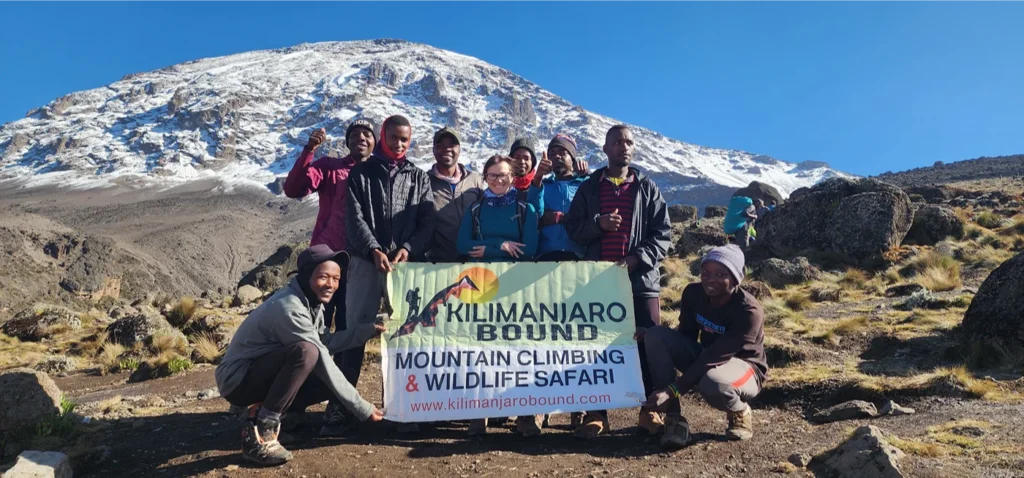
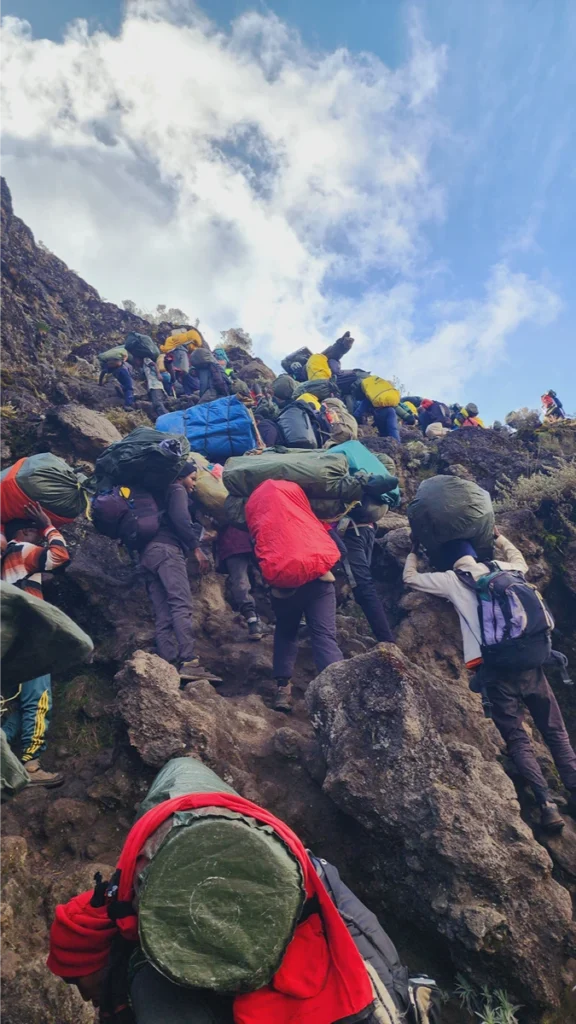
The 7-Day Northern Circuit on Mount Kilimanjaro is an accelerated iteration of the mountain’s newest, longest, and most scenic trail. Spanning approximately 88 kilometers (55 miles), this route circles the remote northern slopes, offering 360-degree views, low foot traffic, and diverse ecosystems.
While standard itineraries spread this trek across 8 to 9 days to optimize physiological adaptation, this condensed 7-day mountain itinerary (9 days total including airport transfers) pushes straight through key elevation zones. It demands strong endurance, high-altitude determination, and disciplined pacing.
Starting Point: Lemosho Gate (2,100 m / 6,889 ft)
Ending Point: Mweka Gate (1,640 m / 5,380 ft)
Total Trekking Distance: ~88 km (55 miles)
Duration: 7 Days on the mountain (plus 2 transfer/arrival days)
Trek Difficulty: Very High (Compressed timeline requiring rapid altitude gain)
Maximum Altitude: Uhuru Peak (5,895 m / 19,341 ft)
Accommodation: High-altitude four-season mountain tents
Route Profile: West-to-North circumnavigation, descending via the southern Mweka route.
Upon arrival at Kilimanjaro International Airport, you will be met by our transfer team and driven to your hotel in Moshi. In the afternoon or evening, you will meet your Lead Guide for a pre-climb briefing, mandatory safety checks, and an equipment inspection.
3 - 4 hours
~890 m (2,919 ft)
Montane Forest
Dinner
After an early breakfast, drive from Moshi through local villages to Lemosho Gate for registration. The trek begins along a winding path through untouched montane rainforest. Watch for Black-and-White Colobus monkeys and exotic flora along the trail.
3–4 hours
2,100 m to 2,750 m (6,889 ft to 9,022 ft)
Rain Forest
Breakfast, Lunch, Dinner
Mti Mkubwa Camp
Leaving the rainforest, the trail steepens as you cross out of the giant heather zone onto the lower edge of the Shira Plateau. In this condensed itinerary, you bypass the standard Shira 1 rest stop, advancing straight up to Moir Hut tucked into the base of the Lent Hills.
6–8 hours
+590 meters
Alpine Desert
Breakfast, Lunch, Dinner
Moir Hut Camp
Kick off the morning with a short, steep climb out of the Moir Valley. Option to take an acclimatization side-hike up to the Lent Hills ridge before returning to the main northern traverse trail.
You are now traversing the northern slopes of Kibo, passing through desolate high-altitude alpine desert. The trail undulates around vast ridges with unobstructed vistas sweeping north toward Kenya. Arrive at Buffalo Camp (also known as Pofu Camp) by afternoon.
5 - 7 hours
-180m / -590ft (Trekking high, sleeping lower)
Alpine Desert
Breakfast, Lunch, Dinner
Buffalo Camp
Climb out of Buffalo Camp and traverse sparse ridge trails along the northern flank. This stage features expansive views into Kenya’s outback. The terrain feels remote and otherworldly, ending at Third Cave Camp where the Rongai Route converges.
5–7 hours
4,020 m to 3,870 m (13,189 ft to 12,696 ft)
Alpine Desert
Breakfast, Lunch, Dinner
Third Cave Camp
Ascend steadily across the lunar landscape of the Saddle connecting Kibo and Mawenzi peaks. You reach School Hut early in the afternoon. The rest of the day is spent resting, hydrating, organizing gear, and taking an early dinner before an midnight summit departure.
4 - 5 hours
3,870 m to 4,750 m (12,696 ft to 15,584 ft)
Alpine Desert
Breakfast, Lunch, Dinner
School Hut
Your guides will wake you up around 11:00 PM with hot tea and light snacks. By midnight, you begin the ultimate mental and physical challenge under a blanket of stars. The trail consists of loose volcanic scree, zig-zagging steeply up the crater rim toward Gilman’s Point at 5,685 meters. This section is cold, steep, and requires deep mental focus.
Reaching Gilman’s Point takes roughly 5 to 6 hours, rewarding you with a spectacular sunrise over Mawenzi Peak. From there, you follow the crater rim for another 1 to 2 hours, passing massive blue ice walls to reach Uhuru Peak, the roof of Africa. After celebrating at the summit, you begin a long, knee-jarring descent down loose scree back to Barafu Camp for a brief rest and warm lunch, before continuing downward into the moorland zone to settle at Millennium Camp for a well-deserved, deep sleep.
Your final morning on the mountain begins with a hearty breakfast and a lively, traditional singing and tipping celebration with your guides, porters, and chefs—the team that made your journey possible.
You then begin a steady, gentle descent through the lush, emerald-green rainforest toward Mweka Gate. The air feels thick, warm, and rich with oxygen as you drop in altitude. At the gate, you will sign out with national park authorities and receive your official gold summit certificate. A private vehicle will meet you at the gate to transfer you back to your hotel in Moshi for a long-awaited hot shower and celebratory dinner.
11 - 15 hours
1,145 meters gain to the summit
Alpine Desert
Breakfast, Lunch, Dinner
Millennium Camp
Complete your final descent through the lush rainforest to Mweka Gate. Sign the official park exit register and receive your gold summit certificates. Say goodbye to your mountain crew before transferring back to your hotel in Moshi for a warm shower and celebration.
3–4 hours
3,100 m to 1,640 m (10,170 ft to 5,380 ft)
Montane Forest
Breakfast, Lunch
Enjoy a relaxed breakfast at the hotel. Check-out is typically by 10:00 AM. Private vehicle transfer to Kilimanjaro International Airport (JRO) for your flight home or connection to a Tanzanian Wildlife Safari.
Breakfast, Lunch
Price per person based on group size. All prices in USD
Price per person
PAX
1 PAX
2 PAX
3 PAX
4 PAX
5 PAX
6 PAX
Price
Price per person
PAX
1 PAX
2 PAX
3 PAX
4 PAX
5 PAX
6 PAX
Mti Mkubwa Camp, also known as Big Tree Camp, is the first overnight stop on the popular Lemosho Route on Mount Kilimanjaro. Located at approximately 2,650 meters (8,694 feet) above sea level, the camp sits within the lush montane rainforest zone on the western slopes of the mountain. It is one of the quietest and most peaceful camps on Kilimanjaro, offering climbers a comfortable introduction to their trekking adventure.
The name “Mti Mkubwa” means “Big Tree” in Swahili, reflecting the dense forest environment that surrounds the camp. The area is filled with giant trees, moss-covered branches, colorful flowers, and tropical vegetation, creating a completely different atmosphere from the higher alpine areas of the mountain. Trekkers often hear birds singing and may even spot black-and-white colobus monkeys moving through the forest canopy during the hike to camp.
The journey to Mti Mkubwa Camp begins at Londorossi Gate, where climbers complete park registration before entering the rainforest. The hike to the camp is generally gentle and allows trekkers to settle into the climb while enjoying the natural beauty of Kilimanjaro’s lower slopes. The cool forest air and shaded trails make the first trekking day relatively comfortable compared to the more demanding days ahead.
Accommodation at Mti Mkubwa Camp is tent-based, with trekkers sleeping in mountain tents arranged within forest clearings. The camp includes basic facilities such as toilets and ranger stations, while meals are prepared by the trekking crew. Due to its lower altitude and sheltered location, temperatures at the camp are usually milder than those experienced higher on the mountain.
Moir Camp is a remote and scenic campsite located on the northern slopes of Mount Kilimanjaro at approximately 4,200 meters (13,780 feet) above sea level. The camp is mainly used by trekkers on the Lemosho and Northern Circuit routes after leaving the Shira Plateau area.
The camp sits in a quiet valley beneath the Lent Hills, surrounded by rugged volcanic landscapes and sparse alpine vegetation. Moir Camp is well known for its peaceful atmosphere and dramatic scenery, making it one of the most memorable camps on Kilimanjaro for many climbers. The nearby Lent Hills also provide optional acclimatization hikes that help trekkers adjust to the altitude.
The environment around Moir Camp is colder and drier than the lower camps, with clear skies often revealing spectacular views of Kibo Peak and the northern mountain slopes. Because fewer climbers pass through this area, the camp offers a more isolated and tranquil trekking experience.
Accommodation at Moir Camp consists of mountain tents arranged on rocky terrain. Temperatures can drop significantly during the night, but the calm surroundings and impressive scenery make the camp a favorite stop for photographers and nature lovers.
Buffalo Camp is a scenic campsite located on the remote northern side of Mount Kilimanjaro at approximately 4,020 meters (13,189 feet) above sea level. It is primarily used by trekkers on the Northern Circuit Route and offers one of the quietest camping experiences on the mountain.
The camp is surrounded by open alpine landscapes, volcanic terrain, and distant views toward the Kenyan plains. The northern side of Kilimanjaro receives less rainfall than the southern slopes, creating a drier and more rugged environment. Trekkers often appreciate the peaceful atmosphere and sense of isolation found at Buffalo Camp.
As climbers continue gaining altitude, Buffalo Camp becomes an important point for acclimatization before moving toward higher northern circuit camps. The thinner air and cooler temperatures provide a true high-mountain experience while allowing trekkers additional time to adjust before summit attempts.
Accommodation is entirely tent-based, with campsites spread across the rocky mountain terrain. Nights are cold and windy, but the clear skies often create excellent conditions for stargazing and photography.
Third Cave Camp is a high-altitude campsite located on the northern side of Mount Kilimanjaro at approximately 3,870 meters (12,697 feet) above sea level. The camp is primarily used by trekkers on the Rongai and Northern Circuit routes as they continue toward the summit area.
The camp is situated within the alpine desert zone, where vegetation becomes sparse and the landscape is dominated by rocky terrain and open mountain scenery. Climbers staying at Third Cave Camp enjoy impressive views of Mawenzi Peak and the surrounding northern slopes of Kilimanjaro. The peaceful setting and lower traffic compared to southern routes create a more remote mountain experience.
Third Cave Camp is an important acclimatization stop because climbers spend the night at a higher elevation before continuing toward Kibo Hut or School Hut. The thinner air and colder temperatures begin to challenge trekkers more noticeably, making proper rest and hydration especially important at this stage of the climb.
Accommodation consists of mountain tents arranged on rocky camping grounds. Temperatures at night can become very cold, especially during windy conditions. However, the clear skies and isolated setting provide excellent opportunities for mountain photography and stargazing.
School Hut is a high-altitude summit camp located on Mount Kilimanjaro at approximately 4,750 meters (15,584 feet) above sea level. It is primarily used by climbers on the Rongai and Northern Circuit routes before their final summit attempt to Uhuru Peak.
The camp is positioned within the alpine desert zone, surrounded by rocky volcanic landscapes, glaciers, and dramatic mountain scenery. Due to its high elevation, the environment is cold, dry, and windy, with very little vegetation. Climbers staying at School Hut typically rest early before beginning their summit ascent during the night.
Accommodation at School Hut includes simple mountain shelters and camping areas for trekkers and support crews. The camp’s strategic location allows climbers a shorter summit push compared to some other summit camps on Kilimanjaro.
Millennium Camp is a lower-altitude campsite on Mount Kilimanjaro located at approximately 3,820 meters (12,532 feet) above sea level. It is commonly used by climbers descending the mountain after successful summit attempts, particularly on the Mweka Route.
The camp is positioned near the edge of the rainforest zone, where the alpine environment gradually transitions back into greener vegetation and forest landscapes. After the demanding summit climb, many trekkers appreciate the warmer temperatures and increased oxygen levels found at Millennium Camp.
Accommodation at the camp consists of mountain tents arranged within designated camping areas. The atmosphere is usually relaxed and celebratory as climbers recover from the summit and prepare for the final descent to Mweka Gate.
There are no results matching your search
Everything you need to know about what makes this route special
Pole Pole (Swahili for "Slowly, Slowly"). Pacing yourself early prevents premature exhaustion.
Consult a physician regarding Acetazolamide (Diamox) to aid high-altitude adaptation.
Professional guides conduct daily pulse-oximeter pulse readings and medical assessments (Lake Louise Score system) twice a day.
Protection for unexpected flight delays, lost gear, or medical cancellations
Choose the best season for your Mount Kilimanjaro Climbing adventure
Clear & Warm
21–27°C base / -7 to -29°C summit
High
Premium
The warmest months on the mountain, with excellent visibility. Expect generally clear skies in the mornings and evenings; clouds may appear during the day with occasional brief showers.
Clear & Cold
15–20°C base / -10 to -20°C summit
Very High
Premium
The probability of rain is minimal, skies are mostly clear, and the visibility is unparalleled. July and August are the busiest months on the mountain, with crowds thinning in September and even more so in October.
Variable — occasional showers
18–25°C base / -10 to -20°C summit
Low to Moderate
Standard
Early October is still stable, but by November, less stable weather patterns can bring rain every day for a short period. March begins with a short dry window, but by mid-March the long rains begin.
Visa & Entry Requirements
Tanzania Tourist Visa: Most travelers require an entry visa. Apply online for an e-Visa at least 3 weeks prior, or obtain a Visa on Arrival at Kilimanjaro International Airport (JRO) for $50 USD ($100 USD for US passport holders).
Passport Validity: Your passport must be valid for at least 6 months beyond your departure date with at least two blank pages.
Yellow Fever Vaccination: Required if arriving from or transiting through a country with a risk of Yellow Fever transmission.
Difficulty & Success Rate
The Northern Circuit is classified as physically demanding primarily due to its length (88 kilometers) and the extreme altitude of summit night. However, because it spreads the ascent over eight full days, it is widely considered the safest and most achievable route for walkers of average fitness levels.
By eliminating rapid changes in altitude, it gives your body the best environment to adapt. While standard 5 and 6-day routes see success rates drop below 60%, the 8-day Northern Circuit maintains a consistent, industry-leading summit success rate of over 95%.
It is the only trail offering a complete 360-degree traverse around the mountain. It provides unmatched wilderness scenery, near-empty trails, and exceptional summit success rates due to prolonged exposure to moderate altitudes.
Beginners can complete it provided they have high physical fitness and endurance. However, complete beginners are strongly advised to pick the 8-day or 9-day version, as the day-3 elevation jump on the 7-day itinerary can be punishing.
Beginners can complete it provided they have high physical fitness and endurance. However, complete beginners are strongly advised to pick the 8-day or 9-day version, as the day-3 elevation jump on the 7-day itinerary can be punishing.
All accommodation on the Northern Circuit is wilderness tent camping. Mountain crews pitch heavy-duty 4-season 2-person tents, provide private chemical toilet tents, and set up a large, heated dining tent for daily meals.
Summit night involves 6 to 8 hours of steep uphill hiking over scree in sub-zero temperatures, gaining over 1,100 meters of elevation. It is mentally and physically demanding, followed immediately by a long descent down the mountain.
Public long-drop pit latrines are available at national park campsites. However, high-quality operator packages include private chemical toilet tents that are transported, set up, and sanitized by your porter crew at every camp.
Water is sourced from mountain streams by our crew, boiled thoroughly, and treated with purification tablets before being provided to trekkers each morning and evening.
Tipping is a traditional and vital part of Kilimanjaro trek culture. Group tipping averages approximately $300 to $350 USD total per climber, distributed directly to the lead guides, assistant guides, cook, and porters during the end-of-trek ceremony at Mweka Gate.
Real experiences from real adventures who’ve explored Tanzania with us


 Verified
 Verified
 Verified
 Verified
 Verified
 Verified
 Verified
 Verified
 Verified
 Verified
Let our travel specialists create a personalized itinerary just for you
There are no results matching your search