
The 6-day Lemosho route is a scenic, challenging trek on Kilimanjaro that approaches from the west, offering high success rates (around 85%) due to excellent, gradual acclimatization. It merges with the Machame route, traversing through rainforests, the Shira Plateau, and the Barranco Wall before a midnight summit bid. It is considered ideal for fit, experienced hikers.
Difficulty: Moderate to challenging due to altitude and some steep sections.
Scenery: Arguably the most scenic route, offering diverse landscapes from rainforest to moorland, alpine desert, and ice-capped summit.
Acclimatization: Good due to the gradual ascent and opportunities to “climb high, sleep low.”
Traffic: Relatively low compared to the Machame or Marangu routes, especially in the initial days.
Starting Point: Londorossi Gate (requires a drive from Moshi or Arusha).
Ending Point: Mweka Gate.


Morning: After breakfast at your hotel in Moshi or Arusha, you’ll be driven to the Londorossi Gate (approximately 2-3 hours). Registration formalities will take place here. You’ll meet your guide, porters, and cook.
Hike: The trek begins with a gentle walk through the lush rainforest. Keep an eye out for Colobus monkeys, various bird species, and unique flora. The trail is relatively flat and well-maintained.
Camp: Mti Mkubwa Camp is located within the montane forest zone. You’ll have dinner and overnight in tents. Expect a cooler and humid environment.
3-4 hours
~390m / 1,279ft
Rain Forest
Breakfast, Lunch, Dinner
Mti Mkubwa Camp
Morning: The trail gradually steepens as you leave the rainforest and enter the moorland zone. The vegetation transitions to giant heathers and open grasslands.
Hike: You’ll continue ascending, enjoying increasingly expansive views. The air will become noticeably thinner. Lunch will likely be served en route.
Camp: Shira Camp 1 offers panoramic views of the surrounding plains and the Kibo peak (Kilimanjaro’s highest summit) in the distance on a clear day. The temperatures will be cooler, especially at night.
5-6 hours
~755m / 2,478ft
Breakfast, Lunch, Dinner
Shira 1 Camp
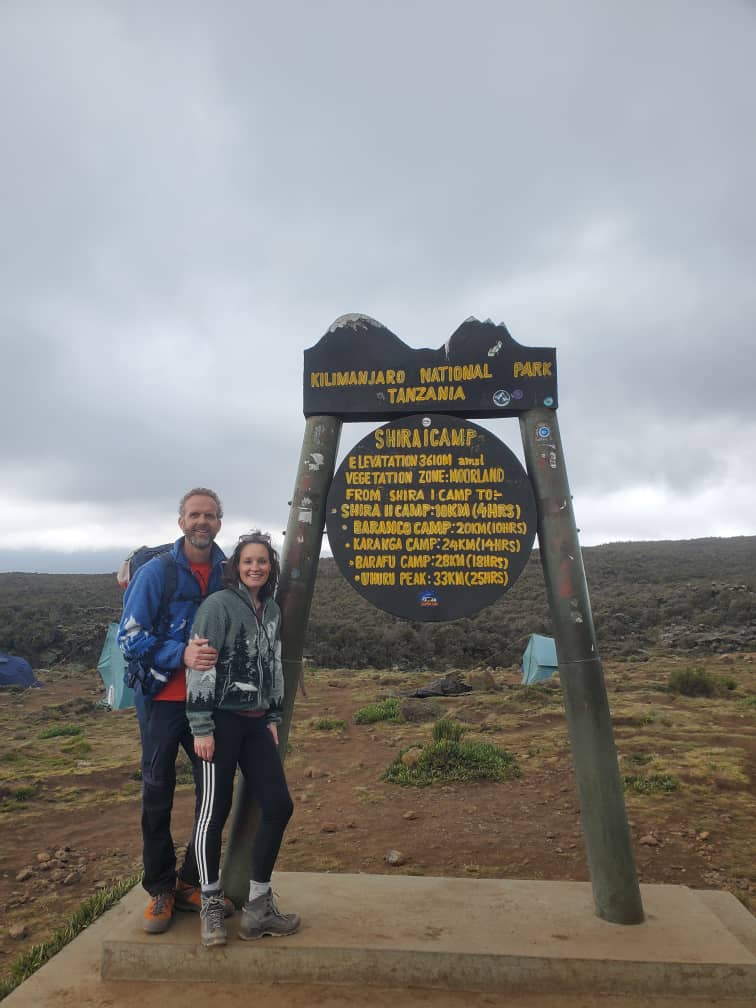
Morning: This day is crucial for acclimatization. You’ll have a relatively shorter hike across the Shira Plateau, a high-altitude desert formed by the collapsed Shira volcano.
Hike: The terrain is generally flat or gently undulating. You’ll have ample time to explore the unique geological features of the plateau. Optional acclimatization walks around Shira Camp 2 may be offered by your guide.
Camp: Shira Camp 2 provides stunning views, especially at sunset. You’ll spend a second night at a similar altitude, which aids in acclimatization.
3-4 hours
~395m / 1,295ft
Breakfast, Lunch, Dinner
Shira 2 Camp
Morning: This is a longer and more challenging day, but vital for acclimatization. You’ll ascend steeply towards the Lava Tower, a volcanic plug.
Hike: The hike to Lava Tower takes you through the alpine desert zone, characterized by sparse vegetation. Reaching the Lava Tower (higher altitude) and then descending to Barranco Camp (“climb high, sleep low”) is excellent for your body to adapt to the altitude.
Afternoon: After lunch near the Lava Tower, you’ll descend into the Great Barranco Valley, known for its giant Senecio plants. The descent can be steep and rocky in sections.
Camp: Barranco Camp is situated in a beautiful valley surrounded by towering cliffs and the impressive Barranco Wall.
6-8 hours
~730m / 2,395ft ascent, ~654m / 2,146ft descent
Breakfast, Lunch, Dinner
Barranco Camp
Morning: You’ll start the day by tackling the Barranco Wall. This is a non-technical but somewhat challenging scramble over rocks. Your guides will assist you.
Hike: After conquering the wall, the trail continues with undulating terrain, offering fantastic views back towards the Barranco Valley and forward to the Kibo massif. You’ll traverse the Karanga Valley (some itineraries include an overnight here, making it a 7-day route).
Afternoon: The final stretch to Barafu Camp is a challenging ascent over rocky and barren terrain. “Barafu” means “ice” in Swahili, and this camp is exposed and often windy and cold.
Barafu Camp is a basic, high-altitude camp situated on a rocky ridge with stunning views of Mawenzi and Kibo peaks. You’ll have an early dinner and try to get some rest before your summit attempt.
6-8 hours
~705m / 2,314ft
Breakfast, Lunch, Dinner
Barafu Camp
Midnight/Early Morning: You’ll be woken up very early (around midnight to 1 am) for your summit push.
Hike (Summit): The ascent to the summit is the most challenging part of the trek. You’ll hike in the dark at a slow but steady pace over steep scree and rocky terrain. The goal is to reach Stella Point (5,756m / 18,885ft) around sunrise. From Stella Point, it’s about a 45-minute to 1-hour hike along the crater rim to Uhuru Peak, the highest point in Africa.
Descent: After celebrating your achievement and taking photos, you’ll begin the long descent back to Barafu Camp for a short rest 1 and some refreshments. Then, you’ll continue descending to Mweka Camp. The descent can be tough on the knees.
Mweka Camp is located in the upper rainforest zone and offers a warmer and more oxygen-rich environment for a well-deserved night’s sleep.
10 - 15 hours
~1,214m / 3,983ft ascent, ~2,795m / 9,171ft descent
Breakfast, Lunch, Dinner
Mweka Camp
Morning: After breakfast, you’ll have a relatively short and pleasant descent through the lush rainforest on a well-maintained trail.
Hike: This is your final opportunity to enjoy the unique flora of the montane forest.
At Mweka Gate, you’ll receive your summit certificates. Your transport will be waiting to take you back to your hotel at Bristol Moshi for a much-needed shower and rest.
3-4 hours
~1,460m / 4,790ft
Price per person based on group size. All prices in USD
Price per person
PAX
1 PAX
2 PAX
3 PAX
4 PAX
5 PAX
6 PAX
Price
Price per person
PAX
1 PAX
2 PAX
3 PAX
4 PAX
5 PAX
6 PAX
Mti Mkubwa Camp, also known as Big Tree Camp, is the first overnight stop on the popular Lemosho Route on Mount Kilimanjaro. Located at approximately 2,650 meters (8,694 feet) above sea level, the camp sits within the lush montane rainforest zone on the western slopes of the mountain. It is one of the quietest and most peaceful camps on Kilimanjaro, offering climbers a comfortable introduction to their trekking adventure.
The name “Mti Mkubwa” means “Big Tree” in Swahili, reflecting the dense forest environment that surrounds the camp. The area is filled with giant trees, moss-covered branches, colorful flowers, and tropical vegetation, creating a completely different atmosphere from the higher alpine areas of the mountain. Trekkers often hear birds singing and may even spot black-and-white colobus monkeys moving through the forest canopy during the hike to camp.
The journey to Mti Mkubwa Camp begins at Londorossi Gate, where climbers complete park registration before entering the rainforest. The hike to the camp is generally gentle and allows trekkers to settle into the climb while enjoying the natural beauty of Kilimanjaro’s lower slopes. The cool forest air and shaded trails make the first trekking day relatively comfortable compared to the more demanding days ahead.
Accommodation at Mti Mkubwa Camp is tent-based, with trekkers sleeping in mountain tents arranged within forest clearings. The camp includes basic facilities such as toilets and ranger stations, while meals are prepared by the trekking crew. Due to its lower altitude and sheltered location, temperatures at the camp are usually milder than those experienced higher on the mountain.
Shira 1 Camp is a scenic campsite located on the expansive Shira Plateau on Mount Kilimanjaro. Situated at approximately 3,500 meters (11,483 feet) above sea level, the camp is commonly used by trekkers following the Lemosho and Shira routes. It marks the transition from the rainforest and moorland zones into the open alpine environment of the mountain.
The camp sits on one of Kilimanjaro’s oldest volcanic formations, offering wide-open landscapes and spectacular panoramic views. Unlike the forested camps lower on the mountain, Shira 1 Camp features open grasslands, volcanic rock formations, and sparse vegetation adapted to the harsher mountain climate. The area provides clear views of Kibo Peak and the surrounding plains stretching toward western Tanzania.
Trekkers reaching Shira 1 Camp often notice the effects of higher altitude for the first time, making the camp an important acclimatization stop during the climb. The route leading to the camp is less steep than many other sections of the mountain, allowing climbers to gradually gain elevation while enjoying the unique scenery of the Shira Plateau.
Accommodation at Shira 1 Camp is entirely tent-based, with camping areas spread across the plateau. Facilities are basic and include toilets and ranger stations. Nights at the camp are usually colder and windier than those at lower camps due to the open landscape and higher elevation. However, the clear skies often provide excellent opportunities for stargazing and photography.
Shira 2 Camp is a high-altitude campsite located on the expansive Shira Plateau on Mount Kilimanjaro at approximately 3,850 meters (12,631 feet) above sea level. The camp is commonly used by climbers on the Lemosho, Shira, and Northern Circuit routes and serves as an important acclimatization stop before trekking toward Lava Tower and the southern circuit of the mountain.
The landscape around Shira 2 Camp is dramatically different from the rainforest and moorland zones lower on the mountain. The area is dominated by open alpine desert terrain, volcanic rock formations, and sparse high-altitude vegetation. The camp offers breathtaking panoramic views of Kibo Peak, Mount Meru, and the vast Shira Plateau stretching across Kilimanjaro’s western slopes.
Trekkers reaching Shira 2 Camp often begin to feel the effects of altitude more noticeably due to the thinner air. For this reason, the camp plays a major role in helping climbers acclimatize gradually before moving to higher elevations. The hiking trails leading to the camp are generally gentle, allowing climbers to enjoy the scenery while steadily gaining altitude.
Accommodation at Shira 2 Camp is entirely tent-based, with designated camping areas spread across the rocky plateau. Nights are cold and temperatures can drop below freezing, especially during clear weather conditions. Despite the harsh environment, the camp remains one of the most scenic overnight stops on Kilimanjaro.
Barranco Camp is one of the most scenic and memorable camps on Mount Kilimanjaro, located at an altitude of approximately 3,960 meters (13,000 feet). Positioned on the southern slopes of the mountain, the camp is commonly used by climbers trekking through the Machame, Lemosho, Shira, and Umbwe routes. Surrounded by towering volcanic landscapes and unique alpine vegetation, Barranco Camp offers trekkers a beautiful resting point before continuing toward the summit.
The camp lies within the dramatic Barranco Valley, beneath the famous Barranco Wall and with excellent views of Kibo Peak. The surrounding environment is characterized by giant groundsels, everlasting flowers, and rugged mountain terrain that creates one of the most photographed locations on Kilimanjaro. Due to its position between the moorland and alpine desert zones, the scenery changes dramatically compared to lower camps, giving climbers a true sense of the mountain’s diverse ecosystems.
Barranco Camp is also an important acclimatization stop during the climb. Many itineraries reach the camp after ascending to higher elevations such as Lava Tower before descending again to sleep at Barranco. This “climb high, sleep low” approach helps the body gradually adapt to altitude and increases the chances of a successful summit attempt. Trekkers often spend the afternoon resting, enjoying mountain views, and preparing for the next day’s hike.
Accommodation at Barranco Camp is entirely tent-based, with climbers sleeping in mountain tents provided by their trekking operators. The camp includes basic facilities such as ranger stations and simple toilets, while meals are usually prepared by the mountain crew. Even with its remote setting, Barranco Camp remains one of the liveliest and most social camps on Kilimanjaro because several routes meet there before continuing toward the summit.
Barafu Camp is one of the main summit camps on Mount Kilimanjaro, located at approximately 4,673 meters (15,331 feet) above sea level. The camp is used by climbers on the Machame, Lemosho, Umbwe, and Southern Circuit routes before their final ascent to Uhuru Peak.
The camp is situated in a harsh alpine desert environment with rocky terrain, steep slopes, and strong winds. The name “Barafu” means “ice” in Swahili, reflecting the cold conditions experienced at this altitude. Climbers usually arrive in the afternoon, rest briefly, and begin their summit attempt around midnight.
Accommodation at Barafu Camp consists of mountain tents placed on rocky ground. Despite the challenging environment, the camp provides spectacular views of glaciers, surrounding peaks, and dramatic mountain landscapes.
Mweka Camp is a forest campsite located on the lower slopes of Mount Kilimanjaro at approximately 3,100 meters (10,170 feet) above sea level. It is commonly used as the final overnight stop for climbers descending the mountain after successful summit attempts.
The camp is situated within the rainforest zone, surrounded by dense vegetation, giant trees, and rich mountain forest scenery. After the cold alpine conditions higher on the mountain, many climbers enjoy the warmer temperatures and oxygen-rich environment found at Mweka Camp.
Accommodation at Mweka Camp is tent-based, with designated camping areas and basic mountain facilities. The camp provides a comfortable resting point before the final descent to Mweka Gate.
There are no results matching your search
Everything you need to know about what makes this route special
While the 6-day Lemosho offers good acclimatization, it's crucial to listen to your body, stay hydrated, and inform your guide if you experience any symptoms of altitude sickness.
You should have a good level of fitness and be prepared for several days of sustained hiking at altitude.
It is mandatory to hike Kilimanjaro with a registered guide and support crew (porters and a cook). They are invaluable for navigation, safety, camp setup, and meal preparation.
Proper gear is essential for a successful and comfortable trek. This includes warm layers, waterproof clothing, sturdy hiking boots, a good sleeping bag, a headlamp, sunscreen, and a hat.
Drink plenty of water throughout the trek and eat the nutritious meals provided by your cook.Hydration and Nutrition: Drink plenty of water throughout the trek and eat the nutritious meals provided by your cook.
Be aware of the signs and symptoms of altitude sickness (headache, nausea, dizziness, fatigue) and communicate them to your guide immediately.
Practice responsible tourism by packing out all trash and minimizing your impact on the environment.
Choose the best season for your Mount Kilimanjaro Climbing adventure
Clear & Warm
21–27°C base / -7 to -29°C summit
High
Premium
The warmest months on the mountain, with excellent visibility. Expect generally clear skies in the mornings and evenings; clouds may appear during the day with occasional brief showers.
Clear & Cold
15–20°C base / -10 to -20°C summit
Very High
Premium
The probability of rain is minimal, skies are mostly clear, and the visibility is unparalleled. July and August are the busiest months on the mountain, with crowds thinning in September and even more so in October.
Variable — occasional showers
18–25°C base / -10 to -20°C summit
Low to Moderate
Standard
Early October is still stable, but by November, less stable weather patterns can bring rain every day for a short period. March begins with a short dry window, but by mid-March the long rains begin.
Your water bladder hose will freeze on summit night unless it’s insulated or you blow air back into it after sipping.
Train with a Pack: Don’t just run; hike on inclines wearing a 6–10kg pack to prep your legs.
Hydrate: Aim for 3–4 liters of water a day. Dehydration mimics altitude sickness.
Eat even if you’re not hungry: Your body burns massive calories at altitude, but your appetite will disappear. Force-feed yourself the “mountain fuel” provided by your crew.
The 6-day route is significantly harder. In the 8-day version, you have two extra days to acclimatize, which makes the walking days shorter and the summit night more manageable. In the 6-day version:
Yes. Because you are ascending rapidly, most climbers will feel some symptoms (headache, nausea, or loss of appetite). The “climb high, sleep low” rule is still followed at Lava Tower (Day 3), which helps, but the pace is relentless.
Many climbers use Diamox (Acetazolamide) to aid acclimatization. Since the 6-day Lemosho is a “fast” route, it is highly recommended to consult your doctor about it.
On Day 4, you’ll tackle the Barranco Wall. It looks like a vertical cliff, but it’s actually a “scramble” where you use your hands and feet to climb. You don’t need technical climbing gear, but it requires a head for heights!
Real experiences from real adventures who’ve explored Tanzania with us
Posted on TripadvisorVerified To the Uhuru Peak and back I summited Uhuru Peak in February 2026 via the 7-day Lemosho route. Kilimanjaro Bound was recommended to me by friends who had summited Mt. Kilimanjaro in 2021. The company accommodated my request on just three weeks’ notice. On the pre-trek day, I met my guide for a briefing about the ascent itinerary and the rental gear I would need. The ascent crew consisted of eight people who supported my daily needs throughout the adventure. My guide, Aggrey, was punctual, tactful, and patient. He was responsive to my requests, encouraging when needed, and knowledgeable about the wildlife and culture of Tanzania and other African countries. Aggrey was just the perfect guide for me - both in personality and in the mental support he provided throughout this challenging experience. My chef, Eli, prepared delicious meals, including fresh salads, fruits, and crepes with fruit jam which were my favorite. Kelvin was the first person I saw every morning, bringing me wash water and hot tea, and the last one to wrap up the day the same way. I also appreciated the hard work of the rest of the team—Colin, Gift, Baraka, Samson, and Michael—who carried our gear from camp to camp, brought fresh water from mountain streams, and maintained the portable toilet. They even met me halfway on the most challenging sections of the route (Lava Tower and the descent from Uhuru Peak, in my case) and helped me make it back to camp when I was super exhausted. Tips / What I wish I had done differently: I wish I had brought beef jerky or other dried meat/fish snacks, as meals from day 3 or 4 onward did not include meat due to limited storage capabilities for fresh meat products on a long trek. I wish I had taken a daytime nap or gotten more sleep before summit night (“push night”), as lack of sleep combined with high altitude made me very drowsy during the final ascent and made it more challenging.Posted on TripadvisorVerified An Unforgettable Experience – We All Summited Climbing Kilimanjaro with Kilimanjaro Bound was truly life-changing. We did the 6-day Marangu route with a small group of four, and every one of us reached the summit—something I credit directly to the incredible support we received on the mountain. Our main guide, Aggrey, was exceptional. His calm leadership, constant encouragement, and attention to how each of us was feeling made all the difference, especially on summit night. When things got hard, he never let us doubt ourselves. Reaching the summit together was emotional, humbling, and unforgettable. Kilimanjaro Bound doesn’t just guide climbs—they take care of people. I can’t recommend them highly enough.Posted on TripadvisorVerified Best experience ever with Kilimanjaro Bound!! I just finished 6 days on the Marangu route to Mt Kili, could not have done it without this amazing crew! All 4 in our group reached the summit!. Our guides, cook, porters, everyone worked so hard to make this experience happen. Everything was organized, great communication, we learned so much about the country, history, culture, wildlife, terrain. I can not say enough praise about this group, I’ve never seen such hard work, positive attitudes, and big smiles. You can tell they love what they are doing and care about their clients. It is truly one of the hardest things I’ve done and once in a lifetime experience. Thank you all for making it happen!!Posted on TripadvisorVerified A great day hike to Mandara hut I travelled solo with Kilimanjaro Bound for a day hike to the Mandara Hut. It was truly amazing and great experience. Mr Aggrey, my guide, is very experienced and knowledgeable. He made the trip enjoyable. I plan in 2027 to hike to the top of Kilimanjaro with KB. Thanks Aggrey for the great trip. Bello A.Posted on TripadvisorVerified ????️⭐️Amazing trip with Aggrey I recently completed my Kilimanjaro Ascent with Kilimanjaro Bound, and it was truly the experience of a lifetime. This was a solo trip for me, and from beginning to end, everything was seamless, well-organized, and filled with moments I will never forget. A very special thanks to my guide, Aggrey. He was absolutely outstanding—professional, knowledgeable, and incredibly supportive throughout the climb. From setting the right pace to keeping the atmosphere positive and safe, he made the journey not just successful, but deeply enjoyable. I couldn’t have asked for a better guide to accompany me on this adventure. Climbing Kilimanjaro had always been a dream, and with Kilimanjaro Bound (and Aggrey by my side), it turned into a reality far beyond expectations. I felt cared for, encouraged, and inspired every step of the way. ✨ If you’re planning to climb Kilimanjaro, I wholeheartedly recommend Kilimanjaro Bound—their professionalism and personal touch make all the difference.Posted on TripadvisorVerified Kilimanjaro beklommen met Kilimanjaro Bound We zijn 8 dagen met het bedrijf Kilimanjaro Bound de berg op geweest. We hadden het aangeraden gekregen van kennissen die vorig jaar ook met hen de Kilimanjaro beklommen hebben en daar erg enthousiast over waren. We hadden een team van 11 mensen mee (ze stelden zich voor als het Dream team, maar daar was geen woord aan gelogen), bestaande uit gidsen, porters een kok etc. Omdat je 8 dagen met elkaar op de berg zit ben je afhankelijk van het team voor eten, wash-wash, toilet. We hadden vanaf dag 1 direct het gevoel dat we volledig op hen konden bouwen en in goede handen waren. Dankzij het team (en ook dankzij onszelf natuurlijk) hebben we de Uhuru-peak bereikt, het hoogste puntje van de Kilimanjaro. We hadden voor de zekerheid vitaminepillen meegenomen, maar hebben die niet nodig gehad met alle verse groente en fruit die mee de berg op zijn gegaan. Zelfs op dag 8 kregen we nog verse watermeloen en ananas bij het ontbijt. We zijn ook grotere internationale bedrijven tegengekomen op de berg. Nu geloof ik dat je daar ook een mooi tijd mee hebt, maar wij waren heel erg blij met dit Tanzaniaanse bedrijf. Je werd in alles ontzorgd (behalve klimmen, dat moet je echt zelf doen), kon je eigen tempo lopen we hadden een heel fijn team. Een extra bedankje voor onze gidsen Amani en (papa) Atanas. We gaan deze ervaring nooit vergeten.Posted on TripadvisorVerified Thank you! Last November, I climbed to the summit of Kilimanjaro by bicycle. It was an amazing experience and an incredible challenge. I would like to express my deepest gratitude to all of my crew members.Posted on TripadvisorVerified Highly recommend! Fantastic experience climbing Mt Meru with Kilimanjaro Bound We had a truly unforgettable climb up Mount Meru, thanks to our fantastic guides, Aggrey and Samson! From start to finish, the entire team was exceptional. Aggrey and Samson went above and beyond to make sure we were well-prepared, informed, and comfortable throughout the journey. Not only did they guide us with professionalism and care, but they also shared fascinating information about the mountain, its surroundings, and the route—making the experience even more enriching. Most importantly, they always prioritized our safety and comfort, which allowed us to fully enjoy every moment of the climb. The meals on the trek were also delicious, exactly just what we needed to stay energized. A heartfelt thank you to the whole team, especially Aggrey and Samson, for making this adventure so special. We appreciate everything you did for us!Posted on TripadvisorVerified Recommended! Two days ago I just finished climb to Kilimanjaro. It was successfull mainly because of the attitude of the whole team from Kilimanjaro bound. All the provided service were incredible. Food was amazing and overall experience is unforgettable. I would for sure recommend this company, if you are looking for some adventure around Kilimanjaro. I ended up going with Kilimanjaro vound to another trip, one day to Materuni coffee and waterfalls which was also incredible!Posted on TripadvisorVerified "Highly recommended!" Aggrey was exceptional—always calm, prepared, and motivating. Kilimanjaro Bound took care of every detail, making our trek safe and enjoyable. A truly top-tier agency!Load more
Let our travel specialists create a personalized itinerary just for you
There are no results matching your search