By Samson lauwo

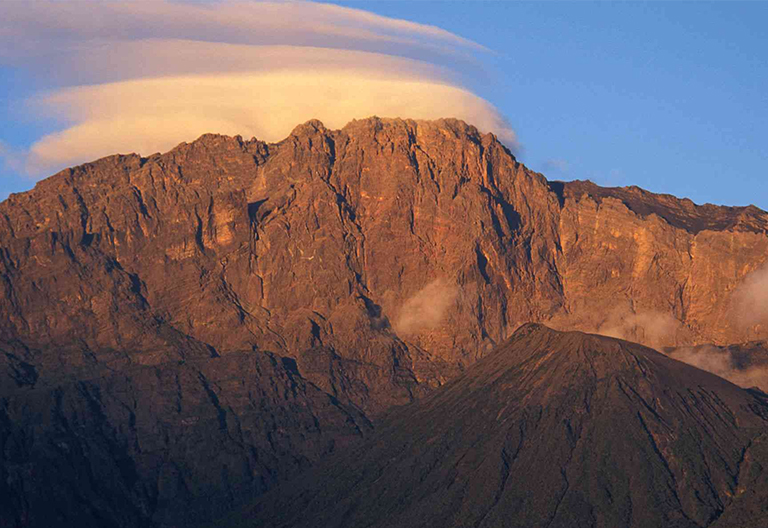
At 5896m Mount Kilimanjaro, Africa’s highest mountain and one of the continent’s magnificent sights. Located within Mount Kilimanjaro National Park, the Mountain itself has three main volcanic peaks, Kibo, Mawenzi and Shira. The name itself “Kilimanjaro” is a mystery wreathed in clouds. It might mean Mountain of Light, Mountain of Greatness or Mountain of Caravans.
Above the gently rolling hills and plateaux of northern Tanzania rises the snowy peak of Mt. Kilimanjaro, it’s slopes and glaciers shimmering above the rising clouds. Kilimanjaro is located near the town of Moshi and is a protected area, carefully regulated for climbers to enjoy without leaving a trace of their presence. The mountain’s ecosystems are as strikingly beautiful as they are varied and diverse. On the lowland slopes, much of the mountain is farmland, with coffee, banana, cassava, and maize crops grown for subsistence and cash sale. A few larger coffee farms still exist on the lower slopes, but much of the area outside the national park has been subdivided into small plots. Once inside the park, thick lowland forest covers the lower altitudes and breaks into alpine meadows once the air begins to thin. Near the peak, the landscape is harsh and barren, with rocks and ice the predominant features above a breath-taking African view.
Climbing Mt. Kilimanjaro is the highlight of most visitors’ experiences in Tanzania. Few mountains can claim the grandeur, the breath-taking views of Amboseli National Park in Kenya, the Rift Valley, and the Masaai Steppe, that belongs to Kilimanjaro. Hiking on the ‘rooftop of Africa’ — the highest point on the continent at 5896 metres — is the adventure of a lifetime, especially because, if paced well, everyone from seasoned trekkers to first-time enthusiasts can scale the snowy peak.
Kilimanjaro. The name itself is a mystery wreathed in clouds. It might mean Mountain of Light, Mountain of Greatness or Mountain of Caravans. Or it might not. The local people, the Wachagga, don’t even have a name for the whole massif, only Kipoo (now known as Kibo) for the familiar snowy peak that stands imperious, overseer of the continent, the summit of Africa.
Kilimanjaro, by any name, is a metaphor for the compelling beauty of East Africa. When you see it, you understand why? Not only is this the highest peak on the African continent; it is also the tallest free-standing mountain in the world, rising in breath-taking isolation from the surrounding coastal scrubland – elevation around 900 metres – to an imperious 5,895 metres (19,336 feet).
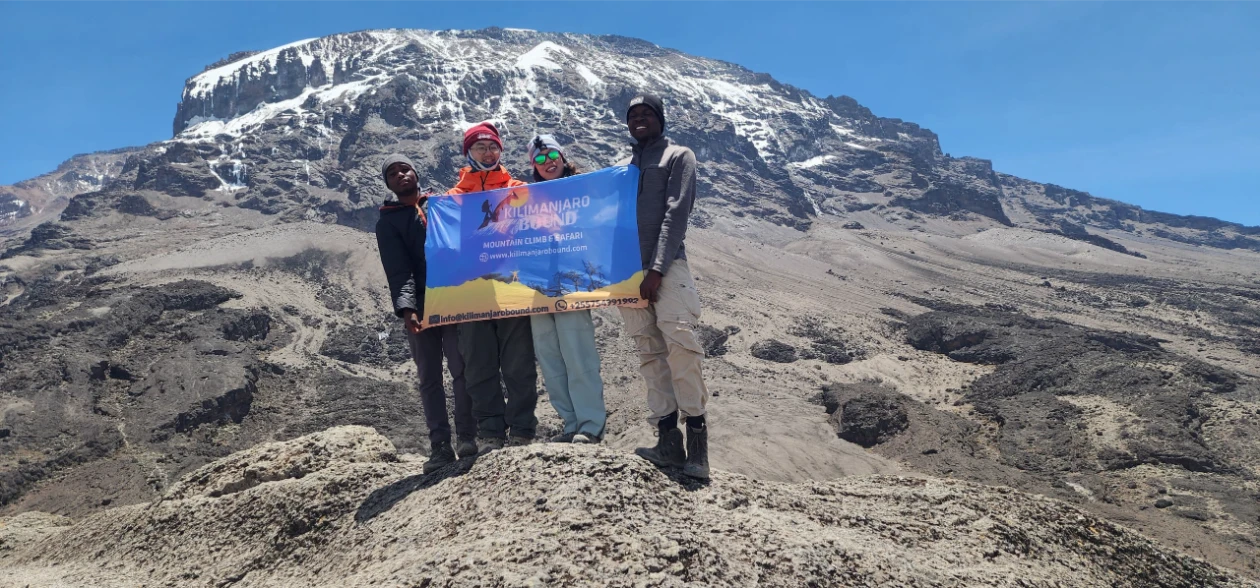
Kilimanjaro is one of the world’s most accessible high summits, a beacon for visitors from around the world. Most climbers reach the crater rim with little more than a walking stick, proper clothing and determination. And those who reach Uhuru Point, the actual summit, or Gillman’s Point on the lip of the crater, will have earned their climbing certificates.
And their memories.
But there is so much more to Kilimanjaro than her summit. The ascent of the slopes is a virtual climatic world tour, from the tropics to the Arctic.
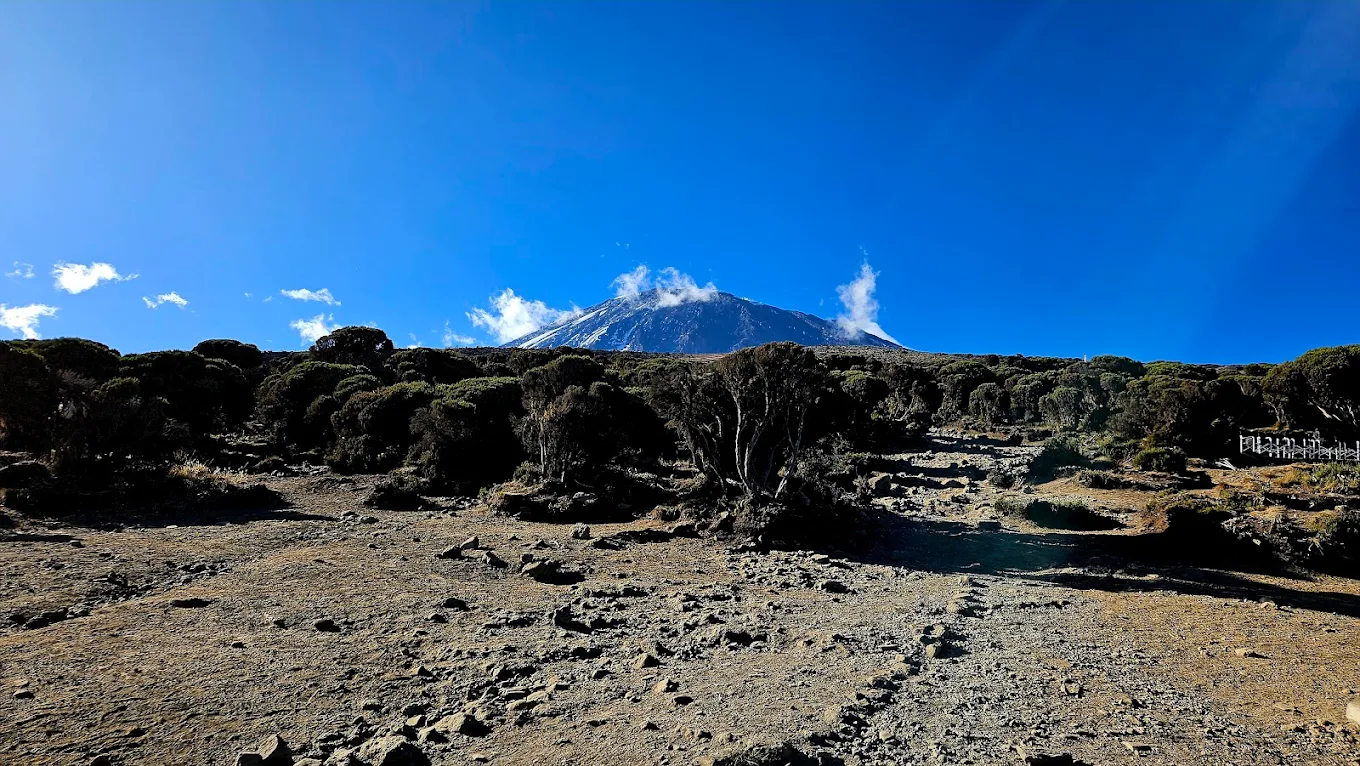
Even before you cross the national park boundary (at the 2,700m contour), the cultivated foot slopes give way to lush montane forest, inhabited by elusive elephant, leopard, buffalo, the endangered Abbot’s duiker, and other small antelope and primates. Higher still lies the moorland zone, where a cover of giant heather is studded with otherworldly giant lobelias.
Above 4,000m, a surreal alpine desert supports little life other than a few hardy mosses and lichen. Then, finally, the last vestigial vegetation gives way to a winter wonderland of ice and snow – and the magnificent beauty of the roof of the continent.
Size: 1668 sq km 641 sq miles).
Location: Northern Tanzania, near the town of Moshi.
Kilimanjaro Bound offer a large range of trips and excursions suitable for any budget or time available. We are there to organise everything that you need during your African Adventure.
Whether that is Climbing Mount Kilimanjaro, going on Safari, experiencing a fantastic beach holiday on the island of Zanzibar or another Tanzania Short Tour.
Whatever you choose, Kilimanjaro Bound will take great care of you whilst you enjoy the beauty of our wonderful country.
? Questions About Mount Kilimanjaro National Park
More About Mount Kilimanjaro National Park on Wikipedia.
Hello, I am Samson, Kilimanjaro Treking Specialist and founder of Kilimanjaro Bound. I have summited mount kilimanjaro 1000 times. l
There are no results matching your search
The best time to climb Kilimanjaro is during the dry seasons: January–March (warmer, slightly quieter) and June–October (coolest, busiest, best weather). These months offer the highest success rates, clear skies, and better views.
Climbing Mount Kilimanjaro is a journey through five distinct ecological zones—from tropical rainforests to arctic summits. To reach Uhuru Peak (5,895m) safely, your gear must be professional, lightweight, and based on a high-performance layering system.
Summiting Kilimanjaro doesn't require an elite athlete — but it does demand preparation.
Summiting Kilimanjaro doesn't require an elite athlete — but it does demand preparation.
Summiting Kilimanjaro doesn't require an elite athlete — but it does demand preparation.
More stories, guides and travel inspiration await